.png?width=50&height=50&name=mcc%20150x150%20(1).png)
How SiC Schottky Diodes Minimize Reverse Recovery Charge
Silicon carbide (SiC) Schottky barrier diodes are used in power converters because they have very low reverse recovery charge (Qrr). This reduces switching losses and supports higher switching frequencies.
In a silicon diode (PN diode), charge builds up in the junction during forward conduction. When the diode switches to reverse bias, that charge must be removed before the device can block voltage. This creates reverse current and increases switching loss.
SiC Schottky diodes do not store charge in the same way. Current flows through majority carriers only, so stored minority charge is negligible. Because of this, reverse recovery charge is very low.
This difference directly impacts switching losses and overall efficiency
Why SiC Schottky Diodes Have Near-Zero Reverse Recovery
The behavior comes from the device structure.
A silicon diode (PN diode) uses both majority and minority carriers. During conduction, minority carriers are injected into the junction. When the diode switches, this stored charge must be removed before the device can block voltage.
A Schottky diode uses a metal–semiconductor junction. Conduction occurs through majority carriers only, so there is no significant stored minority charge that needs to be removed during switching.
As a result:
- reverse recovery charge (Qrr) is negligible
- reverse recovery current is minimal
- switching behavior is fast
This is why SiC Schottky diodes are well suited for high-frequency power converters.
Reverse Recovery in Silicon PN Diodes
Reverse recovery in a PN diode is tied to stored charge in the junction.
When the current changes direction:
- Stored charge remains for a short time
- Current flows in reverse while the charge is removed
- The diode then starts blocking voltage
This produces a reverse current spike and additional switching loss.
Reverse Recovery Behavior
|
Stage |
Description |
|
Storage time |
Charge remains in the junction after current crosses zero |
|
Reverse current |
Current flows in reverse while charge is removed |
|
Recovery completion |
The diode begins to block reverse voltage |
This reverse current is handled by the switching device in the circuit.
Comparison of Silicon and SiC Diodes
The difference in switching behavior comes from how charge is handled inside the device.
Silicon vs SiC Diodes
|
Parameter |
Silicon Fast Recovery Diode |
SiC Schottky Diode |
|
Conduction mechanism |
Majority and minority carriers
|
Majority carriers only
|
|
Reverse recovery charge (Qrr) |
High
|
Near zero |
|
Switching speed |
Moderate |
Fast |
|
Switching losses |
Higher |
Lower |
|
EMI generation |
Higher |
Lower |
|
High-frequency performance |
Limited |
Better |
The gap becomes more noticeable as switching frequency increases.
Impact of Reverse Recovery on Switching Losses
When reverse recovery occurs, the reverse current flows through the switching device as it turns on. This increases switching loss and adds heat.
A simple way to estimate this loss is:
Prr ≈ Qrr × V × fs
Where:
|
Parameter |
Description |
|
Qrr |
Reverse recovery charge |
|
V |
Reverse voltage |
|
fs |
Switching frequency |
With SiC Schottky diodes, Qrr is very low, so this part of the switching loss is reduced.
Capacitive Effects in SiC Schottky Diodes
Even though reverse recovery charge is negligible, switching behavior is still influenced by the diode’s junction capacitance.
During switching, this capacitance must be charged and discharged. This creates a current component that contributes to switching loss, especially at higher voltages and switching frequencies.
As a result:
- switching losses associated with reverse recovery are significantly reduced
- but not eliminated
- junction capacitance becomes the dominant switching loss mechanism once Qrr is negligible
In high-frequency converter design, both reverse recovery charge (Qrr) and junction capacitance should be considered.
Benefits in High-Frequency Power Converters
Many SiC Schottky diodes also have low forward voltage, which helps reduce conduction losses.
-
Lower reverse recovery charge improves switching behavior in several ways:
-
lower switching losses
-
better efficiency
-
less EMI
-
higher switching frequency
-
lower stress on the switching device
Many SiC Schottky diodes are optimized for forward voltage performance, helping reduce conduction losses.
For high-voltage efficiency optimization, see Gen4 Schottky Diodes for High-Voltage Efficiency
Applications That Benefit from SiC Schottky Diodes
These diodes are used where switching losses matter.
Typical Applications
|
Application |
Role of the Diode |
|
PFC circuits |
Boost diode in AC-DC stage |
|
Data center and telecom power |
High-efficiency switching |
|
EV charging systems |
AC-DC conversion |
|
Solar inverters |
Fast switching in DC-AC stage |
|
Industrial SMPS |
Reduced switching loss |
As switching frequencies increase, these advantages become more important.
For automotive and high-voltage system design, see 1200V Gen4 SiC Schottky Diodes for Automotive Power Systems
Voltage Ratings for SiC Schottky Diodes
SiC Schottky diodes are typically used in higher voltage systems.
Typical Voltage Classes
|
Voltage Rating |
Typical Applications |
|
650 V |
PFC and power supplies |
|
1200 V |
Solar, EV charging, industrial systems |
Package Options for SiC Power Devices
Package selection affects thermal performance and layout.
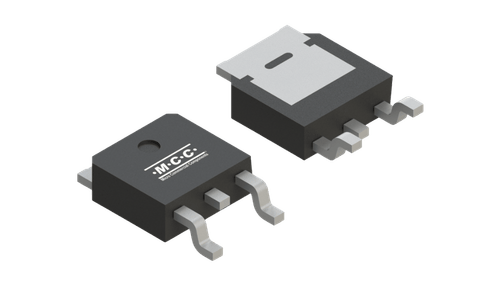
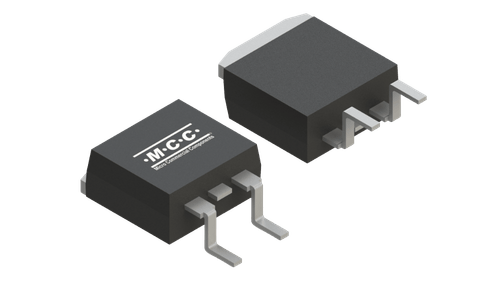
| Package Selection for SiC Diodes: Thermal and Layout Tradeoffs | ||
 |
 |
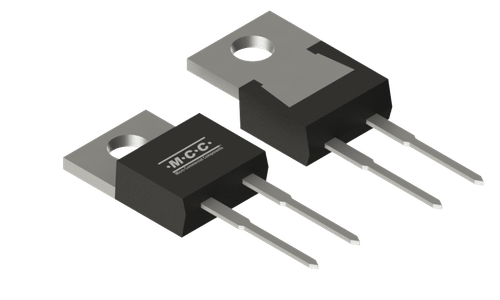 |
| DPAK | D2-PAK | TO-220AC |
| Compact surface-mount for space-constrained designs | Improved thermal performance for higher power density | Through-hole package for robust thermal handling |
|
Typical applications: low- to medium- power converters |
Typical applications: high-efficiency SMPS and PFC stages |
Typical applications: high-power industrial systems |
For 650 V designs in surface-mount packages see Gen5 650V SiC Schottky Diode Series in D2-PAK Packages
The choice depends on power level and board design.
For higher power rectification beyond these package options, including TO-247 designs,, see 1200V Gen6 SiC Schottky Diode in TO-247AD Packages
SiC Schottky Technology in MCC’s Portfolio
MCC’s SiC portfolio includes different Schottky-based device structures and generations. In the current portfolio, Gen4 devices are positioned as JBS (Junction Barrier Schottky) technology.
This approach helps balance switching performance, leakage current, and thermal behavior.
Improvements across generations typically focus on:
- forward voltage
- leakage current
- thermal performance
- switching behavior
MCC Gen4 SiC Schottky Diodes
MCC offers a broad portfolio of SiC Schottky barrier rectifiers for high-efficiency power conversion.
The devices referenced here are part of the latest Gen4 SiC Schottky barrier rectifier release, covering 650 V and 1200 V voltage classes and designed for low switching losses and reliable operation in high-frequency converters.
Explore the latest release: 650 V-1200 V Gen4 Schottky Barrier Rectifiers
These devices are designed for:
- low switching losses
- low forward voltage
- reliable operation in high-frequency converters
Explore the latest NPI releases:
- 650 V Gen4 SiC Schottky Barrier Rectifiers
- 1200 V Gen4 SiC Schottky Barrier Rectifiers
These devices are available in DPAK, D2-PAK, and TO-220AC packages.
MCC’s broader SiC portfolio includes additional voltage classes, package options, and device configurations to support a wide range of power conversion designs.
Learn More About Selecting SiC Schottky Diodes
Reverse recovery is one factor when selecting a diode. Voltage rating, current capability, thermal performance, and package selection also need to be considered.
For a broader framework on device selection see Choosing The Right SiC Schottky